You’ve seen the photos. Rome’s Trevi Fountain is packed shoulder to shoulder. Barcelona’s Sagrada Família with lines snaking around the block. Paris in August feels less like a romantic escape and more like a theme park at capacity.
Europe’s famous spots have their charm, sure. But there’s something deeply satisfying about finding a place where you can actually breathe, where you’re not jostling for space to take a photo, where the locals outnumber the tourists. These places exist, and they’re spectacular.
Here’s your guide to ten European destinations that deliver all the beauty, history, and culture you crave without the elbow-to-elbow chaos.
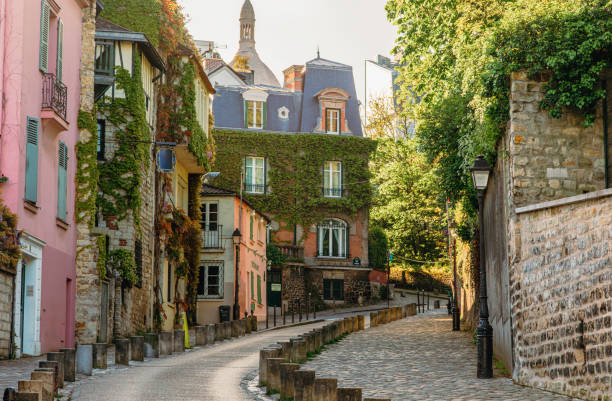
Best Places to Visit in Europe to Avoid Crowds
Each destination below offers something unique—from medieval towns frozen in time to coastal villages where the biggest decision you’ll make is which beach to visit. You’ll find practical details to help you plan, plus the kind of insider knowledge that makes your trip feel less like a checklist and more like an experience.
1. Kotor, Montenegro
Tucked into one of Europe’s most dramatic fjord-like bays, Kotor gives you everything the Croatian coast promises but with about 90% fewer people. The Old Town feels like a secret—narrow stone streets wind between Venetian palaces and hidden squares where cats nap in the afternoon sun. You can walk the entire old quarter in thirty minutes, but you’ll want to take hours.
The famous fortress walls climb straight up the mountainside behind the town. It’s a workout—1,350 steps to the top—but you’ll have stretches of the path completely to yourself. Early morning is best, before 9 AM, when the light hits the bay just right and you can see why UNESCO got involved.
Outside the old town, the Bay of Kotor reveals itself. Rent a car and follow the coastal road to Perast, a tiny village with two islands sitting offshore. One has a church you can visit by water taxi. The entire experience costs maybe 5 euros and feels like stepping into a Renaissance painting. September and early October are perfect—warm enough to swim, quiet enough to hear church bells echo across the water.
2. Sibiu, Romania
This Transylvanian city breaks every vampire-castle stereotype you might have about Romania. Sibiu’s got Germanic architecture, a lively café culture, and squares that could rival Prague’s—minus the stag parties and tourist traps.
The buildings here have eyes. Literally. The attic windows on many old houses are shaped like drooping eyelids, giving the entire old town an oddly watchful feel. Kids love pointing them out. The three main squares connect like rooms in a house, each with its own character. The Bridge of Lies connects two of them (local legend says it’ll collapse if you tell a lie while crossing, though it’s held up fine for centuries).
What makes Sibiu work is how locals actually live here. You’re sharing the city with Romanians going about their day, not wading through crowds following flag-carrying guides. The Christmas market here ranks among Europe’s best, but even in December, it feels manageable. Summer brings an excellent international theater festival if you’re into that scene.
3. The Azores, Portugal
These nine volcanic islands sit in the middle of the Atlantic, and most European travelers still don’t know they exist. That’s excellent news for you.
São Miguel is the biggest island and your likely entry point. The landscape shifts every few kilometers—from crater lakes ringed by blue and green hydrangeas to hot springs you can actually soak in, to tea plantations clinging to hillsides. Yes, tea plantations in Europe. The Gorreana factory still operates and offers free tours and tastings.
Furnas is where things get weird in the best way. The town sits in an active volcanic valley. Local restaurants bury pots of stew in the ground at dawn, and the volcanic heat cooks it by lunch. You can watch them dig up your meal. The Terra Nostra botanical garden here has a massive thermal pool where the iron-rich water turns everything slightly orange. You’ll look sunburned when you get out, but it rinses off.
Pico Island deserves a mention too. You can climb Portugal’s highest mountain, a volcanic cone that rises straight out of the ocean. Or skip the climb and taste wine from vines that grow in black lava rock fields—another UNESCO site that sees maybe fifty visitors on a busy day.
4. Mostar, Bosnia and Herzegovina
The famous bridge gets photographed constantly, but Mostar still flies under the radar compared to Croatia next door. That bridge—Stari Most—is genuinely stunning, a perfect Ottoman arch over the turquoise Neretva River. Local divers jump from it if you pay them enough (about 25 euros pooled from the crowd).
Walk away from the bridge, though. The old town’s back streets tell a different story, where bullet holes from the 1990s war still mark buildings next to carefully restored Ottoman houses. It’s heavy history, but the city doesn’t hide from it. That authenticity makes Mostar feel real in a way that many European tourist towns don’t.
Blagaj is a fifteen-minute drive away. A Dervish monastery sits at the base of a cliff where an underground river bursts out of the rock face. You can eat trout right there, pulled fresh from the river, while sitting on cushions over the water. Go in spring when the river runs highest and coldest, or in fall when the surrounding cliffs turn copper-colored.
5. Galicia, Spain
Everyone goes to Barcelona or Madrid or Seville. Galicia sits in Spain’s northwest corner, green and rainy and largely ignored by package tours. Santiago de Compostela is here—the famous pilgrimage endpoint—but even that city feels manageable compared to Spain’s southern spots.
The coast is where Galicia really shines. The Rías Baixas region produces excellent white wine and even better seafood. Towns like Combarro still have hórreos—traditional raised granaries—lining the waterfront. You can eat percebes (goose barnacles) that sell for 100 euros per kilo in fancy restaurants, but here they’re just what’s for dinner.
A Coruña is the main city, walkable and pretty, with a Roman lighthouse that’s still functioning. But Finisterre is what people remember—the rocky cape the Romans thought was the end of the earth. Pilgrims burn their boots there after completing the Camino. You can just watch the sunset over the Atlantic and feel appropriately small.
6. Matera, Italy
This city was an embarrassment to Italy in the 1950s, so poor that people lived in caves. Now those same cave dwellings, the Sassi, are a UNESCO site and honestly one of the most striking cityscapes you’ll see anywhere.
The houses are carved directly into limestone cliffs, stacked on top of each other in a way that shouldn’t work but does. Many have been converted to hotels, and yes, you should absolutely stay in one. Your room might have been a home for a thousand years, or a wine cellar, or a cistern. The stone stays cool even in southern Italy’s brutal summer heat.
Matera empties out by evening. Day-trippers leave, and you get the city to yourself. The churches here are rock-hewn too, some with Byzantine frescoes still visible on stone walls. Walking the streets after dark feels like moving through a nativity scene—which is why Mel Gibson filmed parts of “The Passion of the Christ” here.
Nearby, the Murgia Plateau has more rock churches scattered across the landscape, most unmarked and accessible only on foot. Hire a local guide for half a day. You’ll scramble up goat paths to find churches that see maybe a dozen visitors a year.
7. Estonian Islands
Saaremaa and Hiiumaa sit in the Baltic Sea, connected to mainland Estonia by ferry but feeling a century removed. Life moves slower here. You’ll see thatched-roof farmhouses, medieval windmills still standing, and forests so dense you understand why Estonian folklore is full of spirits and forest creatures.
Kuressaare, Saaremaa’s main town, has a completely intact medieval castle right on the water. Inside, the museum explains island life in detail—including the Soviet occupation period, which left concrete ruins scattered across both islands that now serve as moody photo opportunities.
The Kaali meteorite crater on Saaremaa is 4,000 years old and surprisingly impressive for something you can walk around in five minutes. Local legends say it’s the gate to the underworld, which seems fair given the dark water at the bottom.
Hiiumaa is even quieter. The Kõpu lighthouse is one of the world’s oldest, built in 1531 and still working. You can climb it for views of the forest stretching in every direction. The island has more trees than people, and that ratio feels about right.
8. Plitvice Alternative: Krka National Park, Croatia
Plitvice Lakes is famous and deservedly so, but the crowds can be crushing—over 1.5 million visitors a year. Krka National Park gives you similar waterfalls and that unreal turquoise water, but with breathing room.
The main waterfall, Skradinski Buk, cascades in seventeen steps through travertine pools. You can swim right at the base, which you can’t do at Plitvice anymore. The water is cold and clear and comes directly from the mountains. Go early—by 8 AM—and you might share it with just a handful of people.
The park has a functioning watermill on the river where they still grind wheat using water power. You can buy the flour if you’re so inclined. Further up the river, Visovac Island has a Franciscan monastery you can visit by boat. Monks have lived there since the 15th century, maintaining gardens and a library of illuminated manuscripts.
9. Faroe Islands
Eighteen islands in the North Atlantic, halfway between Iceland and Scotland. The Faroes see about 100,000 visitors a year, compared to Iceland’s 2 million-plus. The landscape is similar—dramatic cliffs, waterfalls, moody weather—but you’ll actually have space to experience it.
Vágar is where you’ll fly in, and right there you’ve got Múlafossur waterfall dropping directly into the ocean. The hike to Trælanípa and Bøsdalafossur takes about an hour from Sandavágur and delivers views so extreme they don’t look real. The cliffs drop 142 meters straight down, and the waterfall next to you pours into the sea far below.
Turf-roofed houses are everywhere—grass grows thick on traditional homes, insulating against wind and rain. Some villages like Saksun feel frozen in time, sitting at the head of a tidal lagoon with mountains pressing in from all sides.
The weather is legitimately challenging. Rain and wind are constants. But that’s part of it—the islands feel elemental and slightly dangerous in a way that sanitized tourist spots never do. Bring good waterproofs and accept that you’ll get wet.
10. Plovdiv, Bulgaria
Bulgaria’s second city gets overlooked while everyone focuses on Sofia, which is a shame because Plovdiv might be more interesting. The old town sits on three hills, with Roman ruins casually scattered throughout residential neighborhoods.
A massive Roman amphitheater still hosts concerts, discovered by accident during construction in the 1970s. You can visit it most days, and sometimes performances run in summer—watching a show in a theater that’s been in use for 2,000 years adds a certain perspective.
The National Revival houses are what make Plovdiv special, though. These wooden mansions from the 19th century have overhanging upper floors painted in brilliant colors—blues, yellows, reds. Inside, the restored homes show how wealthy merchants lived, with painted ceilings and carved woodwork that took craftsmen years to complete.
Kapana, the creative quarter, fills narrow streets with galleries, craft beer spots, and restaurants serving modern takes on Bulgarian food. It’s gentrified but in that early stage where it still feels genuine rather than calculated. You’ll eat better here than in most European capitals and pay a fraction of the cost—a full meal with local wine runs maybe 15 euros.
Wrapping Up
These places prove you don’t need to sacrifice quality for peace. Each destination offers experiences that rival Europe’s famous spots without the hassle of managing crowds or fighting for space.
Planning helps. Shoulder seasons—May, September, October—work best for most of these locations. Book accommodations early in smaller towns where options are limited. And bring flexibility. Some of these places require extra effort to reach, but that effort is exactly what keeps them crowd-free.
Your next European trip doesn’t have to feel like theme park management. Pick one of these, slow down, and actually experience it.