Denmark consistently ranks among Europe’s happiest countries, and for good reason. The country offers stunning coastlines, historic castles, and some of the best design culture on the planet. But here’s the thing—not every corner of Denmark delivers on that promise.
Some spots look great on Instagram but leave you standing in a crowd, wallet lighter, wondering what all the fuss was about. Others are simply skippable unless you have unlimited time and a serious tolerance for disappointment.
So before you finalize your itinerary, let’s talk about the places that might waste your precious travel hours. Knowing where not to go can save you money, frustration, and that sinking feeling of missed opportunity.
Places to Avoid in Denmark
Every destination has its overhyped spots and tourist traps. Denmark is no exception, despite its overall excellence as a travel destination. Here are ten places you might want to reconsider—or skip entirely—on your Danish adventure.
1. The Little Mermaid Statue in Copenhagen
Yes, we’re starting with the most controversial one. The Little Mermaid statue in Copenhagen’s harbor is arguably the most famous attraction in all of Denmark. And that’s precisely the problem.
Standing at just four feet tall, this bronze sculpture sits on a rock at the waterfront, surrounded by—on any given day—hundreds of tourists jostling for photos. The statue itself is beautiful in its simplicity, a tribute to Hans Christian Andersen’s beloved fairy tale. But the experience of visiting it? That’s another story.
You’ll likely spend 20 to 30 minutes walking from the nearest bus stop or longer if you’re coming from central Copenhagen. Once you arrive, you’ll find yourself craning your neck over selfie sticks and tour groups, trying to catch a glimpse of a rather small figure. The surrounding area offers little else to see, so you’ll make the same long walk back feeling vaguely underwhelmed.
If you’re determined to see it, go at sunrise. Seriously—6 AM in summer gives you a fighting chance at a peaceful moment with the statue. Otherwise, consider viewing it from one of the harbor boat tours instead. You’ll get a better angle and skip the crowds entirely.
2. Strøget During Peak Hours
Strøget in Copenhagen holds the title of one of Europe’s longest pedestrian shopping streets. Stretching about 1.1 kilometers from City Hall Square to Kongens Nytorv, it sounds like a shopper’s paradise. And it can be—at the right time.
Between 11 AM and 5 PM on weekends, Strøget becomes a slow-moving river of humanity. The crush of people makes it nearly impossible to window shop, let alone enter stores without waiting in line. Street performers compete for attention, adding to the sensory overload. What should be a pleasant stroll turns into an exercise in patience and crowd navigation.
The shops themselves lean heavily toward international chains you can find anywhere—H&M, Zara, and the usual suspects. If you’re looking for unique Danish design or local boutiques, you’ll find better options in neighborhoods like Nørrebro or Vesterbro, where the crowds thin out and the character thickens.
That said, if you do want to experience Strøget, try early mornings on weekdays. The architecture is genuinely lovely, and a few independent Danish shops hide among the chains. Just don’t expect a relaxing afternoon browse on a Saturday.
3. Tivoli Gardens at Full Price
Tivoli Gardens is genuinely magical. The historic amusement park, opened in 1843, glows with thousands of lights and offers rides, gardens, and live entertainment. So why is it on this list?
The entrance fee alone runs around 155 DKK (roughly $22 USD), but that’s just the beginning. Rides cost extra—either per ride or through an unlimited ride pass that pushes your total to over 400 DKK. Food inside the park carries a hefty premium. A family of four can easily spend $200 to $300 for an afternoon, and that’s before souvenirs.
The park also gets extraordinarily crowded during holidays, particularly Halloween and Christmas seasons. Wait times for popular rides can exceed an hour, and finding a seat at restaurants requires strategic planning or pure luck.
Here’s the smarter approach: visit on a Friday evening when the entrance fee often includes free live concerts, making the price more reasonable. Or simply stroll past the exterior at night to admire the lights without paying to enter. If you do go inside, pack snacks (allowed in small quantities) and prioritize free entertainment like the gardens and people-watching over the expensive rides.
4. Legoland Billund on Summer Weekends
Legoland Billund holds a special place in many hearts. The original Legoland theme park, built in the town where Lego bricks were invented, offers incredible miniature cities made entirely of those iconic plastic blocks. Kids love it. Adults who grew up with Lego love it too.
But summer weekends transform this charming park into an endurance test. Families travel from across Europe, and the lines reflect it. Popular rides see wait times of 45 minutes to over an hour. The walkways between attractions become congested, making it hard to move at your own pace. And because it’s a bit removed from major cities—about three hours from Copenhagen—you can’t easily escape and come back another day.
The better move? Visit on a weekday during Danish school term time, typically late August through mid-June. The crowds drop dramatically, and you can actually enjoy the Miniland displays without elbows in your ribs. If summer is your only option, arrive right when the gates open and hit the most popular rides immediately. By early afternoon, consider leaving and exploring the surrounding Billund area instead.
5. Nyhavn’s Restaurants
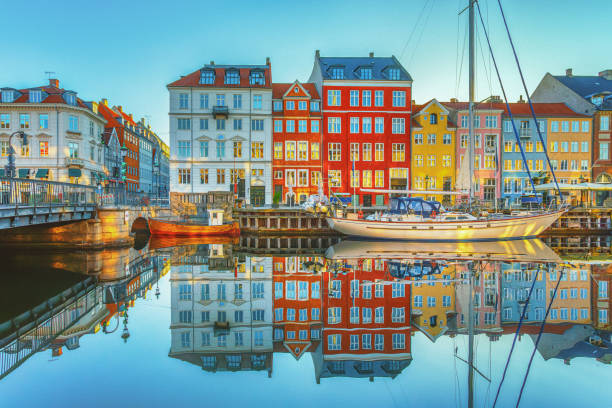
Nyhavn is postcard-perfect. Those colorful 17th-century townhouses lining the canal make for one of the most photographed scenes in Scandinavia. Hans Christian Andersen himself lived in three different houses along this stretch. You should absolutely visit, walk along the waterfront, and take your photos.
Eating there is another matter.
The restaurants lining Nyhavn cater almost exclusively to tourists, and the prices reflect it. A simple fish and chips might run you 180 to 250 DKK ($26 to $36 USD), roughly double what you’d pay a few blocks away. The quality rarely matches the cost. Service can be rushed since the restaurants know most customers are one-time visitors who won’t return regardless of the experience.
Locals almost never eat here. Ask any Copenhagen resident, and they’ll direct you to neighborhoods like Kødbyen (the Meatpacking District), Vesterbro, or even side streets just a five-minute walk from Nyhavn. You’ll find better food, better prices, and a more authentic slice of Danish dining culture.
6. Christiania on Weekends
Freetown Christiania has a fascinating history. This self-proclaimed autonomous neighborhood in Copenhagen began as a squatter settlement in 1971 and has evolved into an alternative community with its own rules, including a famous open cannabis trade on “Pusher Street.”
Visiting during the week offers a genuinely interesting glimpse into counterculture living. You’ll see creative architecture, murals, organic gardens, and alternative businesses. It feels like stepping into a different country within Copenhagen.
Weekends tell a different story. The narrow paths flood with tourists, many drawn solely by the cannabis scene. The atmosphere shifts from community-focused to something more chaotic. Residents, understandably frustrated by disrespectful visitors who ignore the “no photos” rules and treat the neighborhood like a zoo, can be less welcoming.
If Christiania interests you, visit on a Tuesday or Wednesday afternoon. Respect the photography restrictions, especially on Pusher Street. Buy something from one of the local artisan shops or eat at one of the organic cafes. Engage with the community rather than gawking at it. Done right, it’s a memorable experience. Done wrong, it’s uncomfortable for everyone.
7. Kronborg Castle Without a Guide
Kronborg Castle in Helsingør (Elsinore) is the real-life inspiration for Hamlet’s castle. That literary connection alone makes it significant, and the Renaissance architecture is genuinely impressive. UNESCO designated it a World Heritage Site for good reason.
However, wandering through on your own can feel anticlimactic. The rooms, while historically important, appear somewhat sparse. Without context, you’re essentially walking through empty chambers wondering what you’re supposed to feel. The castle’s fascinating history—including its role as a toll collection point for ships passing through the narrow Øresund strait—gets lost without someone to explain it.
The guided tours change everything. Suddenly the dark casemates beneath the castle come alive with stories of soldiers who lived there. The chapel’s significance becomes clear. The connections to Shakespeare (who never actually visited) get explained in their proper literary context.
If you’re making the trip to Helsingør—about 45 minutes from Copenhagen—pay for the guided tour. The summer season also brings outdoor performances of Hamlet in the castle courtyard, which creates a much more memorable experience than solo wandering through halls.
8. Skagen in Midsummer
Skagen sits at Denmark’s northernmost tip, where the North Sea and Baltic Sea dramatically collide. The light there has inspired artists for centuries, and the beaches stretch for miles in both directions. It’s beautiful, truly.
But during midsummer—particularly late June and July—Skagen transforms into one of Denmark’s most crowded destinations. Wealthy Danes and German tourists flock to their summer houses, and the small town’s infrastructure strains under the weight. Restaurant reservations become essential weeks in advance. Parking turns into a competitive sport. The beaches, while long, fill up with families and dogs.
The shoulder seasons offer a completely different experience. Visit in May or September, and you’ll find the same extraordinary light, the same meeting of two seas, but with space to breathe. Hotels cost less. You can actually get a table at one of the excellent seafood restaurants. The famous Skagen Museum has room to appreciate the paintings properly.
9. Roskilde Outside Festival Season
Roskilde, about 30 minutes west of Copenhagen, has two main draws: its UNESCO-listed cathedral (burial site of Danish royalty) and the Viking Ship Museum. Both are worth seeing.
Beyond those two attractions, the town offers relatively little for visitors. The shopping areas feel sleepy. The restaurant scene, outside of a few notable spots, doesn’t match Copenhagen’s variety. Many travelers report spending an entire day there and wishing they’d allocated just half that time.
The exception is late June and early July during the Roskilde Festival, one of Europe’s largest music festivals. The town pulses with energy, international acts perform on multiple stages, and the atmosphere becomes electric. Outside that window, budget three to four hours maximum. See the cathedral, spend time with the Viking ships (they’re genuinely impressive), grab lunch, and head back to Copenhagen or onward to your next destination.
10. The Øresund Bridge Viewpoint
The Øresund Bridge connecting Denmark and Sweden is an engineering marvel. The combined road and rail bridge stretches nearly 8 kilometers, and it became even more famous from the Nordic noir TV series “The Bridge.”
Sounds like it deserves a visit, right? Here’s the problem: there’s no good public viewpoint.
Some visitors travel to Kastrup specifically to see the bridge, only to find limited views partially obscured by industrial areas. The most dramatic perspective actually comes from crossing the bridge itself—by train or car—rather than looking at it from land. But if you don’t have plans to visit Malmö, Sweden, that crossing becomes a costly detour just for the view.
A better option exists. Take the metro to Kastrup and then walk to Amager Strandpark beach. From certain points there, you can see the bridge stretching toward Sweden. Combine it with time on the beach, and you have a pleasant afternoon. But making a special trip purely for the bridge view will likely disappoint.
Wrapping Up
Denmark deserves its reputation as one of Europe’s most rewarding destinations. The design, the food, the coastal beauty, and the general quality of life all deliver on the hype.
These ten places aren’t necessarily bad—some are quite good under the right circumstances. The key is timing and expectations. Visit the Little Mermaid at dawn, skip Nyhavn’s restaurants, and give Skagen a chance in the shoulder season.
Your trip has limited hours. Spend them where Denmark truly shines, and you’ll understand why the Danes rank among the happiest people on earth.